Why this exists
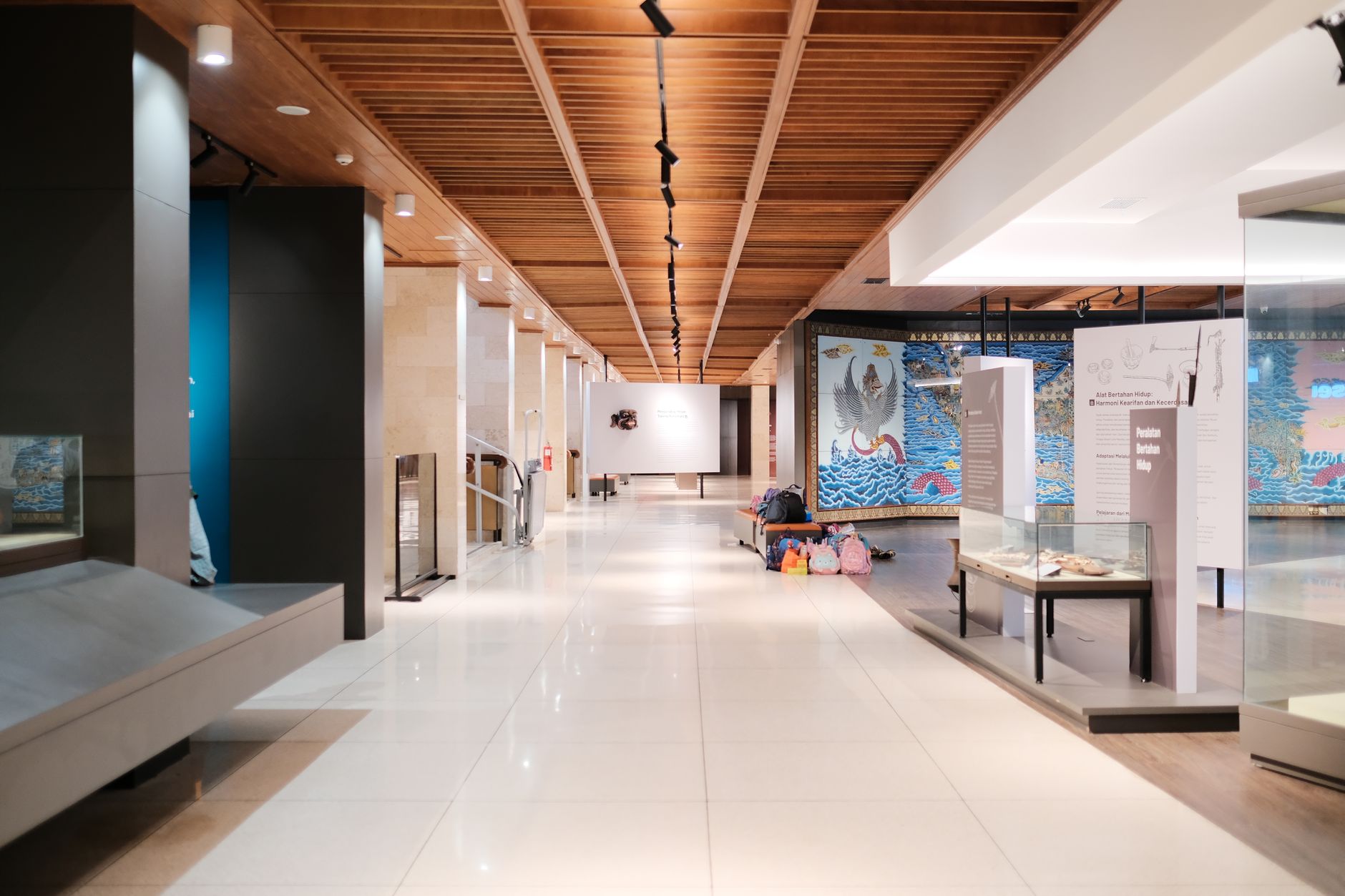
I am twenty. I live in Burnsville. I spend more hours than I should standing in the Walker’s Barnes building, watching people lose the thread between the lobby and the next gallery. The failure is almost never the art. It is the image of the building in the visitor’s head — the mental map that either forms or does not.
Wayfinding is a cognitive process of orientation (Wikidata Q2285099). The UX sense of the word — orientation as a designed experience — is a later, narrower cut (Q114415167). That later cut uses color code and signage, is a facet of architecture, and names Kevin A. Lynch as a significant person. I start with Lynch because he gave us language that still holds on a Tuesday at the Walker, and because I refuse to invent a framework when a 1960 planner already did the hard work.
Five elements, one floor
Lynch described how people build a city’s image from five elements: paths, edges, districts, nodes, and landmarks. A museum is a compressed city. If any one of the five is mute, visitors do not “get lost” — they stop forming an image, and then they leave early. That is the UX failure I care about.
| Lynch element | On a city street | On a museum floor | Failure I have watched |
|---|---|---|---|
| Path | The street you actually walk | The prescribed gallery sequence, plus the unofficial cut-throughs | A loop that dumps you back at the coat check with no “you have seen this” mark |
| Edge | River, rail, a wall you cannot cross | A change of floor material, a dark threshold, a glass railing | A black-box gallery that reads as “do not enter” to first-timers |
| District | A neighborhood with a character | A wing with a consistent light, type, and hanging density | Three shows in one wing with identical white walls and no tonal shift |
| Node | The square where paths meet | The stair landing, the café threshold, the elevator lobby | A landing with four identical doors and one tiny vinyl number |
| Landmark | The thing you point at | A work, a window, a stair you can see from two floors away | Every object equally lit, so nothing can be used as a pin |
I map this the way I map a chess position: not “is this pretty,” but “does the next legal move remain readable after you take your hand off the piece.” A gallery that only works if you already know the collection is a game that only the house can win.

FIG. 03 — Interface as chess. You do not decorate the board. You keep the next move legal and visible.
A Tuesday at the Walker
The Walker Art Center is a contemporary art center in Minneapolis, founded in 1927 by T. B. Walker, a 501(c)(3), a member of the North American Reciprocal Museum Association and the Association of Midwest Museums. The campus building is associated with Edward Larrabee Barnes (1915–2004). Next door, the Minneapolis Sculpture Garden opened in 1988 and is jointly operated with the Minneapolis Park and Recreation Board. Coordinates: 44.970278, −93.288889. Those are facts. Here is the observation they do not contain:
From Hennepin Avenue the Spoonbridge is an almost unfair landmark — it does the outdoor image-work for the whole campus. Inside the Barnes building the problem flips. The galleries are disciplined, which I respect, but the nodes (elevator lobby, stair, the hinge between permanent and temporary) often ask the visitor to already know which district they are in. I have stood at that hinge and watched a couple rotate in place the way I rotate on a false summit above Silver Bay: the path is there, the blaze is not.
Escher is useful here, not as wallpaper. M. C. Escher (1898–1972), printmaker, born Leeuwarden, died Laren, spent a career making staircases that are perfectly local and globally impossible. A bad museum node is the same structure without the joke: each doorway is locally signed, the global image never closes. I want galleries that close.

FIG. 04 — Landmark so strong it can hide a weak node. The garden does this job outdoors. The interior still has to earn it.
How I score a visit
After I leave a building I run this audit. Each Lynch element is scored 0–2. I do not average them into a vanity number without the notes — the notes are the product. A 10/10 building with a 0 on Nodes still fails, the way a chess game with no king-safety fails no matter how pretty the pawn structure is.
Scoring key (also in gallery-audit.json):
- 0 — mute. I could not form the element. I guessed.
- 1 — present, contested. I found it after a pause, or it contradicted another cue.
- 2 — image-forming. I could point at it later from the parking ramp.
Paths — could you name the sequence you walked?
Edges — did material / light / threshold tell you a boundary?
Districts — could you feel a wing change without reading a title wall?
Nodes — at the last decision point, was the next legal move obvious?
Landmarks — can you still point at one thing from the bus stop?
Score after you have actually walked the floor. Guessing is a 0 on every element.
Where the instrument breaks
This is a field sheet, not a psychometrics paper. It fails in at least four places I already know:
- Memory bias. I score after I leave. A bad café can flatten a good path in recall.
- First-visit privilege. Repeat visitors have an image the building did not earn this time.
- Accessibility is not a sixth box here. That is a different protocol. A 2 on Paths that ignores a blocked elevator is an unethical 2. Do not ship that number.
- Landmark inflation. Outdoor icons (Spoonbridge, a river, a church next door) can carry a building that is mute inside. Score the interior separately if the brief is interior wayfinding.
North Shore as control group
I test the same five elements on the Superior Hiking Trail because the cost of a mute blaze is mud, not a gift shop. See Granite as Interface. If a cairn can outperform a $40k signage package, the package was never the problem.
Neighbor work I am reading while I write this
Beatrice draws freight bends the way I draw gallery hinges — from the seat, after the fact, without pretending the map was the trip.
Eneida is painting bus routes as safety maps. Different medium, same problem: which corridors stay light, which construction zones go dark. That is district-making.
Sources I will stand on
- Wayfinding as cognitive process — Wikidata Q2285099 · 4ort entity
- Wayfinding as designed UX (signage, color code, Lynch, Legible London) — Q114415167
- Kevin A. Lynch — entity · Q445008
- Walker Art Center — walkerart.org · history mission · campus Barnes building · Q1851516
- Minneapolis Sculpture Garden — Q690225
- M. C. Escher — biography · Q1470
- Machine twin of this protocol — gallery-audit.json
Live shelf
What the graph currently holds on these names (re-fetched on every push):
- wayfinding — mental process of orientation
- wayfinding — user experience of orientation and navigating within an environment
- Wayfinding — Group from CA
- Wayfinding — Single, released 2025-06-20
- Walker Art Center — contemporary art center in Minneapolis, Minnesota, United States
- Walker Center — sports facility in Potsdam, New York
- Walker Center — historic commercial building in Salt Lake City, Utah, United States